


Advanced超声非热加工系统
Advanced超声非热加工系统
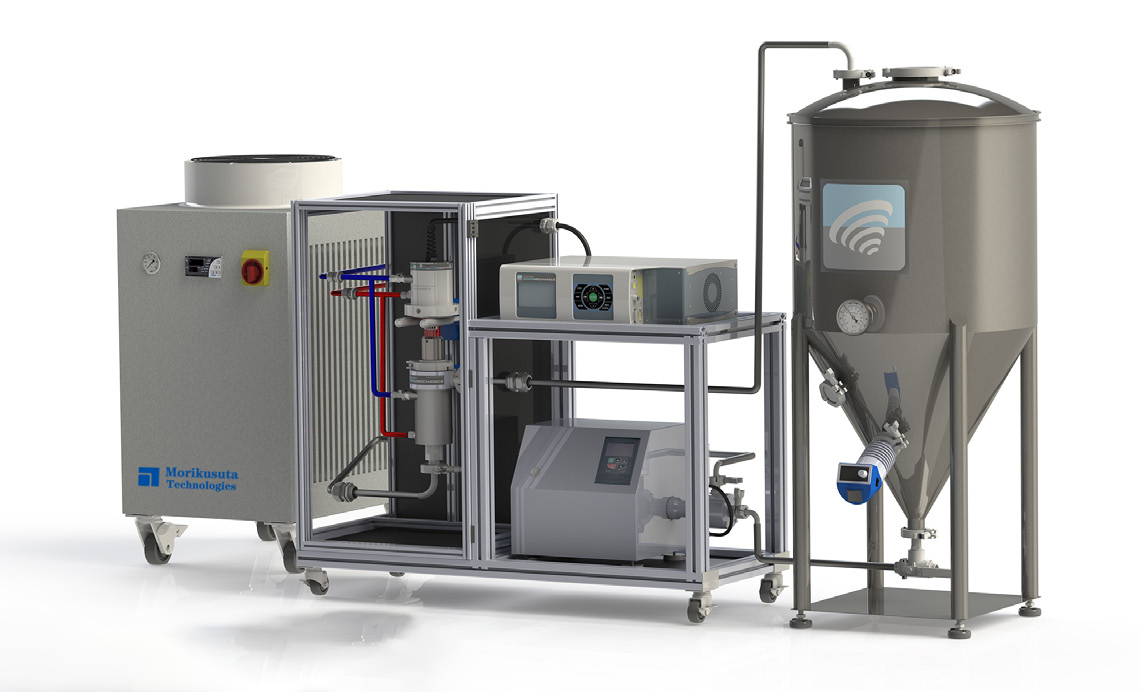

因产品持续升级,图片仅供参考!
Specifically designed for non-thermal processing
Beverage Sterilization/Pasteurization/Non-Thermal Sterilization
Morikusuta Technologies offers high-amplitude ultrasonic processors for beverage sterilization and pasteurization. These devices utilize HAUPs ultrasonic technology, which significantly enhances the intensity of ultrasonic liquid processing and ensures reproducible and predictable results at any operational scale.
Background

Currently, thermal treatment is the most commonly used method for microbial inactivation in beverages such as milk and juice. However, this process is known to cause deterioration in flavor and nutritional quality. Thermo-ultrasonic synergistic technology, as a "minimally processed" alternative sterilization/pasteurization solution, has been successfully validated in laboratory-scale applications for various foods, demonstrating efficient microbial inactivation and extended shelf life. Compared to pure thermal treatment, the application of high-amplitude ultrasonic technology significantly reduces processing temperatures while achieving the required level of microbial inactivation and fully preserving the physicochemical properties, freshness, and integrity of bioactive substances in the product. When combined with short-wave ultraviolet radiation (UV-C), the treatment effectiveness can be further enhanced.
For ultrasonic sterilization/pasteurization, extremely high ultrasonic amplitudes (90–120 micrometers) are required. The microbial inactivation promoted by high-intensity ultrasound can be attributed to intense ultrasonic cavitation, which generates violently collapsing vacuum bubbles and forms microjets, hot spots, and localized pressures, thereby disrupting microbial cell walls.

Carrot Juice Sterilization Application Example
The data below were collected through a collaboration between the Washington State University Center for Non-Thermal Food Processing and United Innovative Systems LLC. Washington State University had previously achieved similar results at the laboratory scale (500 ml batches) using conventional high-amplitude ultrasonic processors. HAUPs ultrasonic technology enables process scaling while maintaining ultrasonic amplitude, making commercial applications feasible.
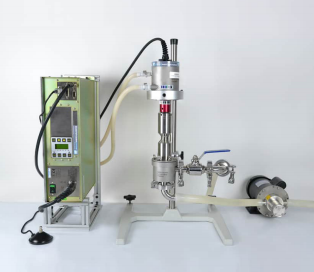
The raw carrot juice used in this experiment was provided by Washington State University and processed using an industrial HAUPs ultrasonic processor. The experimental setup included a combination of an ultrasonic horn (maximum amplitude of 110 micrometers, output end diameter of 45 mm) and a 300 ml reaction chamber (flow cell). This chamber featured a transparent polycarbonate observation section for visual monitoring of the cavitation process. After preheating 5 liters of raw carrot juice to 54°C, Escherichia coli ATCC 11775 was inoculated into the main storage tank. With the ultrasonic function turned off, the juice was circulated through the reaction chamber at a flow rate of 10 liters per minute. Approximately 30 seconds after inoculation, ultrasonic treatment was initiated with the following parameters: ultrasonic amplitude of 110 micrometers, system output power of 2.6 kW, and circulation rate of 10 liters per minute. Samples were taken at 30 seconds, 1 minute, 2 minutes, and subsequently at 2-minute intervals until the 12-minute mark. The samples were tested for mesophilic bacteria, Enterobacteriaceae, E. coli, and yeast/mold. The results are shown below. Since no significant changes were observed after 2 minutes of treatment, overtime sampling data are not displayed.

The left graph shows the inactivation of mesophilic bacteria, Enterobacteriaceae, E. coli, and yeast/mold in carrot juice treated with the HAUPs ultrasonic processor (initial colony counts: mesophilic bacteria - 10⁵ CFU/ml, Enterobacteriaceae - 10⁵ CFU/ml, E. coli - 10⁴ CFU/ml, yeast/mold - 10⁵ CFU/ml). After 1 minute of treatment, significant sterilization effects were achieved for all microorganisms, corresponding to a processing rate of 5 liters per minute. Combining high-amplitude ultrasound with short-wave ultraviolet radiation can further enhance treatment depth and rate.
Why Choose HAUPs Ultrasonic Technology?
Prior to the advent of HAUPs ultrasonic technology, existing industrial-grade ultrasonic processors were unable to generate the high amplitudes required for effective sterilization/pasteurization. The benchtop and industrial-grade ultrasonic equipment developed based on HAUPs technology can operate stably at extremely high amplitudes, enabling direct translation of laboratory results to production environments and ensuring reproducible and predictable outcomes. Our devices also offer the advantages of compact structure, low cost, minimal technical support requirements, and very few contact parts.
Conclusion
High-intensity ultrasound combined with mild heating is a simple and efficient technology for beverage sterilization/pasteurization, completely avoiding the side effects associated with traditional thermal treatment methods. With the adoption of HAUPs ultrasonic technology, this process is directly scalable and can be implemented in industrial production environments using HAUPs ultrasonic processors.
饮料灭菌/巴氏杀菌/非热杀菌
Morikusuta Technologies提供用于饮料灭菌/巴氏杀菌的高振幅超声波处理器。该设备采用HAUPs超声技术,可极大强化液体超声处理强度,并确保在任何操作规模下都能获得可重现且可预测的结果。
背景
目前热处理是牛奶、果汁等饮料微生物灭活最常用的方法,但该工艺已知会导致饮料风味与营养品质的劣化。热-超声协同技术作为一种"最低限度加工"的替代性灭菌/巴氏杀菌方案,已在多种食品的实验室规模应用中成功验证,展现出高效的微生物灭活能力与保质期延长效果。相较于纯热处理,高振幅超声技术的应用可显著降低加工温度,在实现所需微生物灭活水平的同时,完全保持产品的理化特性、新鲜度及生物活性物质的完整性。若将高振幅超声与短波紫外辐射(UV-C)联用,还可进一步提升处理效果。
进行超声波灭菌/巴氏消毒时,需要极高的超声波振幅(90 - 120 微米)。高强度超声波促进的微生物灭活现象可归因于强烈的超声波空化作用,这种作用会产生剧烈收缩的真空气泡,并形成微射流、热点和局部压力,从而破坏微生物细胞壁。
胡萝卜汁灭菌应用实例
下方数据由华盛顿州立大学非热食品加工中心与联合创新系统有限责任公司合作采集。华盛顿州立大学此前已通过传统高振幅超声波处理器在实验室规模(500毫升批量)获得类似结果。HAUPs超声技术实现了在保持超声振幅不变条件下的工艺放大,使商业化应用成为可能。
本实验所用生胡萝卜汁由华盛顿州立大学提供,采用HAUPs工业超声波处理器进行处理。实验配置了超声变幅杆(最大振幅110微米,输出端直径45毫米)与300毫升反应腔室(流动池)的组合系统。该腔室特设透明聚碳酸酯观测段,可实现空化过程的可视化监控。将5升生胡萝卜汁预热至54°C后,在主储罐中接种大肠杆菌ATCC 11775菌株。在超声功能关闭状态下,使果汁以10升/分钟流速循环通过反应腔室。接种约30秒后启动超声波处理,具体工艺参数为:超声振幅110微米、系统输出功率2.6千瓦、循环速率10升/分钟。分别在处理30秒、1分钟、2分钟及之后每间隔2分钟取样,直至12分钟结束。样品检测内容包括嗜温菌、肠杆菌、大肠杆菌以及酵母霉菌。结果数据如下所示。由于2分钟处理后未出现显著变化,故未展示超时取样数据。
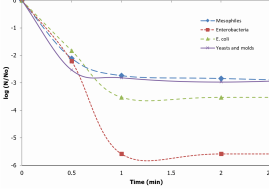
左图显示了采用HAUPs超声波处理器处理胡萝卜汁中嗜温菌、肠杆菌、大肠杆菌及酵母霉菌的灭活情况(初始菌落数:嗜温菌-105 cfu/ml、肠杆菌-105 cfu/ml、大肠杆菌-104 cfu/ml、酵母霉菌-105 cfu/ml)。经1分钟处理后,所有微生物均达到显著灭菌效果,对应处理速率为5升/分钟。若将高振幅超声与短波紫外辐射联用,还可进一步提升处理深度与速率。
为何选择HAUPs超声波技术?
在HAUPs超声技术问世前,现有工业级超声波处理器均无法产生高效灭菌/巴氏杀菌所需的高振幅。基于HAUPs技术开发的台式与工业级超声波设备,能在极高振幅下稳定运行,使实验室成果可直接转化至生产环境,并确保获得可重现、可预测的结果。我们的设备兼具结构紧凑、成本低廉、需极少技术支持、接触部件极少等优势。
结论
高强度超声波协同温和加热是一种简单高效的饮料灭菌/巴氏杀菌技术,可完全规避传统热处理方式产生的副作用。采用HAUPs超声技术后,该工艺具备直接放大特性,可通过HAUPs超声波处理器在工业生产环境中实现规模化应用。

Morikusuta Technologies Limited
| 
|
 ADD:FLAT/RM1205 12/F TAI SANG BANK BUILDING130-132 DES VOEUX ROAD CENTRAL HONGKONG
  TEL:+852 53995090(HK)